






Our
Language Services
Include a variety of best language services customized to your business need.
Linguistic Staffing
Our short and long-term strategies are designed to meet your language needs in a highly effective manner.
Voice Transcription
We understand the subtleties of voice transcription, and our experts are dedicated to providing high quality transcription.
Language Interpretation
Language connects people and we understand important it is to have the right message delivered to your audience.
Certified Translation Agency in India
In language solutions, Knowledgeworks proudly stands out as the epitome of excellence, offering certified translation services. As the premier translation agency in India, we specialize in breaking down language barriers and connecting businesses with diverse audiences across the globe.
With a comprehensive understanding of over 120 languages, including major Indian and international languages, Knowledgeworks possesses the expertise to cater to the unique linguistic needs of businesses operating in India and around the world. Our team of expert linguists ensures that your message is not just translated but transformed, retaining its essence and impact in every language.
At Knowledgeworks, we follow the stringent TEP model–Translation, Editing, and Proofreading–ensuring the utmost precision and quality in every project. Our commitment to perfection begins with the translation phase, where our experts proficiently translate your content, capturing its nuances and cultural context. The review phase, overseen by seasoned professionals, refines the translated material for accuracy and coherence. Finally, our proofreading team meticulously reviews the content, leaving no room for errors, and ensuring flawlessness before delivery.
What sets Knowledgeworks apart is our unwavering dedication to providing holistic solutions. Beyond translation, we specialize in localization, a process that tailors your content to specific regional cultures, ensuring it resonates with diverse audiences. Whether it be websites, software interfaces, or marketing materials, our experts delve into the cultural intricacies, making your content relatable and impactful to the target locales.
Choose Knowledgeworks as a certified translation company in India and experience the seamless convergence of linguistic expertise and cultural understanding. Our translation services in India not only bridge gaps but also pave the way for meaningful global connections, enabling businesses to thrive in the intricacies of the international market. Partner with us and witness your words transcend linguistic boundaries, leaving a lasting impression on every audience.

Global Reach
Studies show that customers prefer buying products or services from websites in their native language.
Improved Client Experience
Making customers feel valued by speaking their language shows that you care and empathize, leading to satisfied customers and business growth.
Reduce Risk
Localization minimizes linguistic errors and helps boost revenue, ensuring effective and more successful business operations.
Effective Marketing
Effective marketing relies on localization; just 31% of the world understands English, highlighting the importance of localized communication for businesses operating internationally.
Improved Brand Value
Having a brand everyone recognizes is only possible when people easily understand your message.
01.
Planning
In the planning phase, we collaborate to understand your exact requirement. We create a detailed plan, analyze the content, and seek your approval. It’s like putting all the pieces of puzzle together to make sure everything fits just right for you.
03.
Quality process
We ensure quality with a thorough two-stage check. Native-speaking experts review, and our in-house team does a final check. We are ISO-certified for our commitment to quality.
Quick Facts About Us
Years Young & Innovating
Hours of Audio Recordings
Billion Words Translated & Counting
Hours of E-Learning Content Localized
Global Client
Domain Expert Natives
Language, eLearning or Multimedia Services
What Are You Waiting For?
Get in touch with us to experience our wide variety of customized language translation services designed
to address your business critical needs.
DO YOU KNOW ABOUT OUR TEAM?
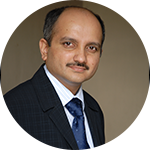
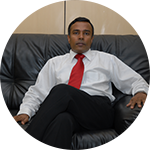
Meet Our Leaders
Meet our eminent leaders who inspire us everyday

Enterprise
Clients who trust us
1000+ clients globally rely on our services for meeting the language requirements.


Proud Members

CONTACT US
Get In Touch
Fill in the information below and our support team will contact you to understand your requirements.
Our Vision
Redefining how enterprises scale knowledge, communication, and learning in an AI-first world—combining domain expertise and proprietary innovation to enable global growth without barriers
Our Mission
Empowering enterprises to transform how they communicate and scale global knowledge—through AI-powered, IP-driven solutions that combine automation with human expertise to deliver speed, precision, and measurable impact
Our History
Founded in 2001 at Bangalore, the technology capital of India, it boasts a Client base comprising the Who’s Who of Information Technology (IT), Manufacturing, Healthcare, BFSI, MRO, and Media sectors, among others. We are ISO Certified provides professional, high-quality, reliable and time-bound translation services for any language combination globally.